
What to Look for in a Wine Fulfillment Partner
For any winery selling direct to consumer, the fulfillment partner is the last hand-off between your brand and your customer’s front door. It’s where compliance, temperature control, packaging, and delivery speed all come together — and where a strong tasting-room relationship can be reinforced or undone by how a shipment arrives.
Wine fulfillment isn’t the same as general e-commerce fulfillment. It carries its own layer of complexity: adult-signature requirements, state-by-state shipping licenses and volume caps, seasonal temperature risk, and fragile, heavy packaging that has to survive the carrier network intact. That’s why most wineries — from small family producers to large multi-label groups — rely on a specialized fulfillment partner rather than handling pick, pack, and ship in-house.
Compliance and licensing support. Direct-to-consumer wine shipping is regulated state by state. A good fulfillment partner helps navigate shipping permits, volume caps, and reporting requirements — rather than leaving that burden entirely on the winery.
Geographic footprint and delivery speed. Where a partner’s warehouses sit relative to your customer base directly affects transit time and how long wine is exposed to heat or cold in transit. A single West Coast facility, for example, means longer cross-country shipping for East Coast customers.
Temperature control. Climate-controlled storage and “weather hold” shipping logic — pausing shipments during extreme heat or cold — protect wine quality year-round, especially during summer and winter.
E-commerce and wine club integrations. The right partner connects cleanly with your existing platform (Commerce7, WineDirect, Vin65, and similar systems) so orders flow automatically instead of requiring manual entry.
Volume, minimums, and fee structure. Some fulfillment providers are built for high-volume wine clubs; others are designed to flex for small producers. Setup fees, monthly minimums, and per-order pricing vary widely, so it’s worth understanding the full cost structure up front.
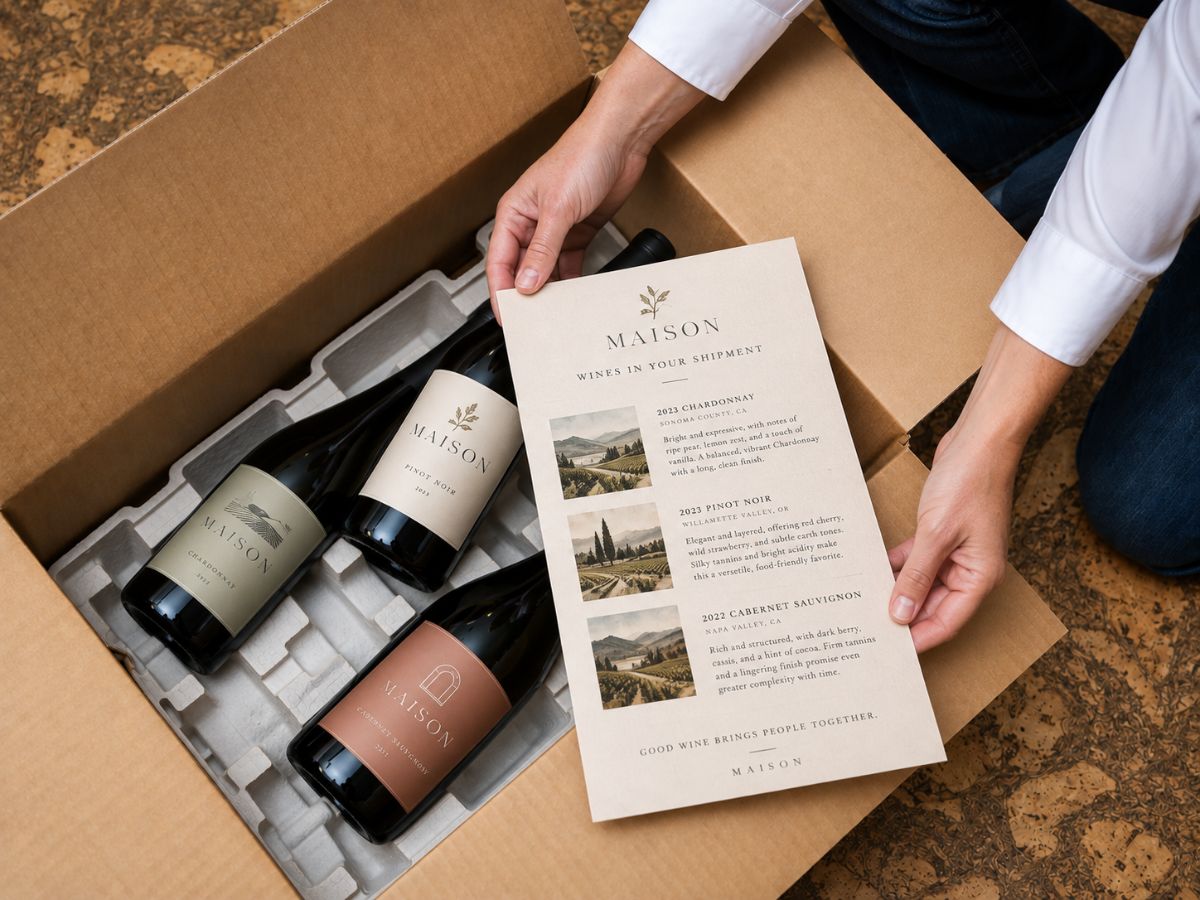
Packaging and sustainability. Custom or branded packaging, low breakage rates, and recyclable materials shape the customer’s unboxing experience as much as speed does.
Service model. A dedicated account manager versus a shared support queue can make a real difference when an order needs a human, fast.
Scalability. The best partners can grow with a winery — additional regions, higher club volume, new sales channels — without forcing a disruptive switch later.
Frequently Asked Questions
Wine fulfillment is the process of storing, picking, packing, and shipping wine orders — typically wine club shipments and direct-to-consumer online orders — on behalf of a winery, usually through a specialized third-party logistics (3PL) provider.
Direct-to-consumer wine shipping involves state-by-state licensing, adult-signature requirements, and temperature-sensitive handling that most wineries aren’t set up to manage at scale. A specialized fulfillment partner absorbs that complexity and typically offers better shipping rates through carrier volume discounts.
Warehousing is storage. Fulfillment includes the execution of a sale — picking, packing, processing the transaction, and coordinating the shipment to the end consumer. A warehouse that also ships and sells wine may take on additional compliance obligations as a de facto shipper or retailer.
Pricing varies by provider and typically includes some combination of setup fees, monthly minimums, per-order picking and packing fees, and storage costs. Because pricing changes frequently and depends on order volume, it’s best to request current quotes directly from providers under consideration.
Start by weighing compliance support, geographic coverage relative to your customers, temperature control, platform integrations, cost structure, packaging quality, service model, and scalability — then request quotes from two or three providers whose footprint and model fit your business.
Download the Guide
Choosing the right partner means comparing options against your specific volume, geography, and platform. Download our full guide — Choosing a Fulfillment Partner: A Winery’s Guide to DTC Logistics — for a closer look at how several established providers compare, plus a worksheet to help you weigh what matters most before you request quotes.